How is Bahrain strengthening urban water security under scarcity and rising desalination costs?
Bahrain is securing its urban water future through a strategic pivot from supply-side expansion to a Modern Demand Management Framework. Guided by the National Water Strategy 2030, the Kingdom is deploying smart metering infrastructure to reduce Non-Revenue Water (NRW), implementing cost-reflective tariff reforms, and transitioning overexploited aquifers into exclusive strategic emergency reserves. These efforts, supported by Green Climate Fund (GCF) initiatives, focus on system-wide efficiency gains and decoupling economic growth from water consumption.
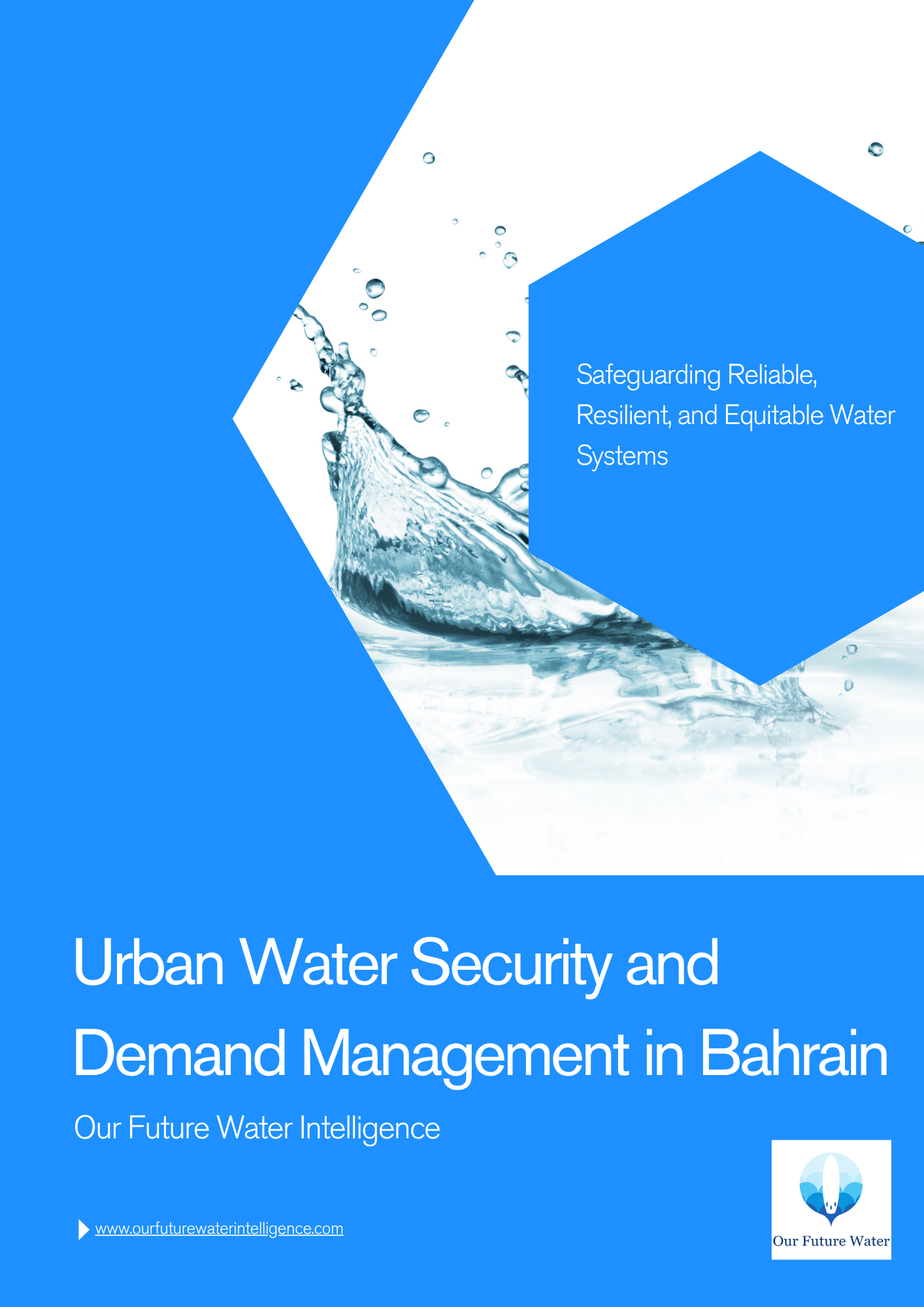
Our Future Water Intelligence presents a strategic overview of how Bahrain is strengthening its urban water security. Authored by Robert C. Brears, this analysis explores how a highly urbanized island state is adapting to full desalination dependency and increasing system vulnerability driven by climate change.
As Bahrain advances its national sustainability objectives, the report examines how institutional coordination, regulatory measures, and digital modernization can build a resilient urban water future.
What Are the Core Pillars of Bahrain’s Urban Water Security Strategy?
Bahrain’s transition toward an efficient and climate-resilient water system is built upon five integrated pillars:
- Strategic Aquifer Preservation: With limited natural freshwater, Bahrain has transitioned its aquifers from active supply sources to emergency reserves. This "underground storage" strategy ensures a critical buffer in the event of desalination plant interruptions, preserving groundwater for national security.
- Digital Water Transformation: The Electricity and Water Authority (EWA) has accelerated the rollout of Advanced Metering Infrastructure (AMI) and GIS-enabled planning tools. These technologies enable real-time leak detection at the premises level, allowing for targeted repairs and a significant reduction in system-wide physical losses.
- Fiscal Sustainability and Tariff Reform: Bahrain is transitioning toward cost-reflective pricing models. New reforms aim to balance fiscal sustainability with social equity, using tiered pricing structures to encourage responsible consumption and improve the cost-recovery ratio of water production.
- Efficiency and Retrofitting Programs: In collaboration with international climate finance, Bahrain is implementing large-scale retrofitting of public and residential buildings with water-efficient technologies. These programs aim to reduce the carbon intensity of the water cycle and lower the aggregate energy demand for desalination.
- Climate-Resilient Governance: The Water Resources Council is aligning urban development with the National Adaptation Investment Plan (NAIP). This includes diversifying non-conventional resources like rainwater harvesting and greywater recycling to build redundancy into the urban water cycle.
Why This Matters for the Gulf Region
As desalination costs rise and climatic energy demand peaks across the GCC, Bahrain’s model of digitalized demand management offers a blueprint for other island and coastal cities. The report provides a strategic lens on how to manage scarcity and stabilize costs by moving away from expensive supply augmentation toward data-driven resilience.
Explore the Full OFW Intelligence Report
For a complete analysis of Bahrain’s governance reforms, demand-management strategies, digital modernization efforts, and climate-resilience pathways, read the full report: Urban Water Security and Demand Management in Bahrain.
Frequently Asked Questions: Bahrain Water Security
Where does Bahrain get its water?
Bahrain relies almost entirely on desalinated seawater for its municipal and urban needs. Natural groundwater is preserved as a strategic emergency reserve to ensure long-term resilience.
How do smart meters help save water in Bahrain?
Smart meters provide real-time data on consumption, allowing the EWA and consumers to detect leaks instantly. This visibility reduces "Non-Revenue Water" and prevents significant waste within the distribution network.
What are cost-reflective water tariffs?
Cost-reflective tariffs are pricing structures that align water rates more closely with the actual costs of desalination and distribution, providing a financial incentive for efficiency while reducing government subsidies.