01
Executive overview
Key findings
87.91%: share of the country's 91 km³ a year of renewable water that originates outside its borders (long-term average, reference year 2023)
16 July – 3 September 2026: national actual water shortage, with the Rhine at Lobith at its lowest level ever measured; drinking water availability was officially unaffected
102 million m³: extra drinking water production capacity targeted by 2030; the first progress report finds achievement uncertain
129 → 100 litres: household use per person per day, 2021 estimate against the 2035 target
02
Buyer relevance
Who the report is for
Drinking water companies and their advisers
Benchmark regional supply margins, such as the four provinces RIVM found without peak reserves in 2020, against the 2030 capacity target.
Industrial and agricultural water users
Understand where they stand in the national priority order during a shortage and what the 2026 drought meant for abstraction.
Engineering and treatment suppliers
See where new supply is coming from, including new groundwater abstraction, central Zeeland treatment and reuse at Terneuzen.
Policy and risk analysts
Follow the planning decisions due in 2027, from the National Water Programme to Deltaplan Zoetwater phase 3.
03
Decision scope
Questions answered
Is the Netherlands water-stressed?
Not on the national measure: water stress was 14.91% in 2023. But 80 of its 91 km³ a year of renewable water arrives from abroad.
Did the 2026 drought affect drinking water?
Not its availability. The country was in a national actual water shortage from 16 July to 3 September 2026, and the government reported no problems with drinking water availability.
Where does Dutch drinking water come from?
Mostly from the ground: groundwater, bank filtrate and dune water made up 806 million of the 1,240 million m³ abstracted in 2025.
How much new capacity is needed?
The national action programme targets 102 million m³ of extra drinking water capacity by 2030; its first progress report finds achievement uncertain.
04
Inside the report
Inside the complete report
Executive Snapshot
1. Why This Matters Now in Netherlands
2. Current Position
3. Key Programmes, Projects and Investment
4. Policy, Regulation and Institutions
5. Risks and Constraints
6. Strategic Implications
7. What to Watch
Source Register
05
Public preview
What to watch next
1. Why This Matters Now in Netherlands
The knelpuntenanalyses (bottleneck analyses) for the Delta Programme review and the National Water Programme 2028–2033, which IenW says will quantify how far freshwater shortages grow nationally and by region.
3. Key Programmes, Projects and Investment
Publication of the action programme's next progress report, and a permit application at Schalkwijk.
4. Policy, Regulation and Institutions
The government's response to the Rli advice, and a successor to the Drinking Water Policy Memorandum 2021–2026.
5. Risks and Constraints
Groundwater recovery over winter 2026–2027 and the onset of the 2027 drought season, which begins on 1 April.
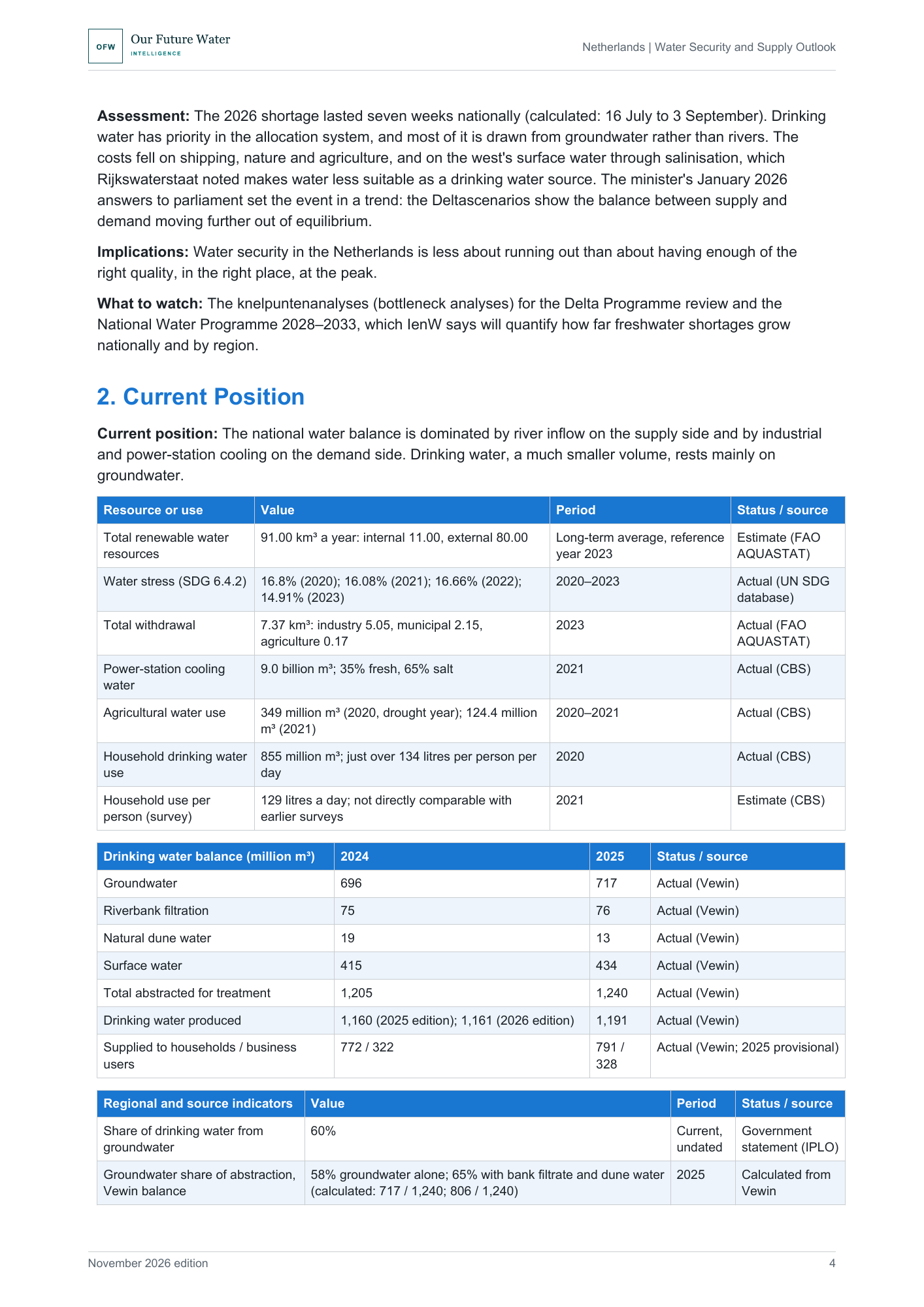
The national water balance and the 2024–2025 drinking water balance by source.
06
Included
What you receive
The complete PDF report: 11 pages, 9 sections, 9 tables and a register of 28 sources.
This edition
November 2026, First edition.
07
Evidence & method
Evidence and method
National water accounts from CBS and FAO AQUASTAT, the Vewin drinking water balance for 2024 and 2025, Rijkswaterstaat and government drought statements from 2026, RIVM and KNMI assessments, Delta Programme and budget documents, and company project announcements.
Sources
28 sources, listed in the report's source register. Evidence current to 1 November 2026. Principal data periods: 2020–2023 national water accounts; 2025 drinking water production and abstraction (Vewin, September 2026); the 2026 drought season; targets for 2030 and 2035 and projections to 2050 and 2100. Status checks as of 1 November 2026. All currency is euros (EUR) unless stated..
Evidence boundaries
This report uses authoritative source material available at the stated research cutoff. It distinguishes published facts, calculated values and analytical interpretation. No independent modelling is performed. Forward-looking analysis reflects published plans, documented trends and stated uncertainties. It does not constitute legal, financial, investment or engineering advice.
08
Lead analyst
Robert C. Brears
Founder, Our Future Water Intelligence
Robert C. Brears is a water-security specialist and author whose work examines utility governance, infrastructure investment, climate resilience and long-term water-system change for executive and policy audiences.
- Decision-focused utility intelligence
- Published water-policy author
- Evidence-grounded system analysis
09
Buyer FAQs
Before you purchase
Who can use the report?
Licensed for internal use within one purchasing organization. The PDF and its contents may be shared with colleagues within that organization. External redistribution, resale and public publication are prohibited without permission.
How is the report delivered?
The PDF is available to download immediately after confirmed payment, through our secure delivery system.
Can my organization buy wider access?
Institutional purchasing: For invoice enquiries, multi-organization licensing or broader access requirements, contact Our Future Water Intelligence.
10
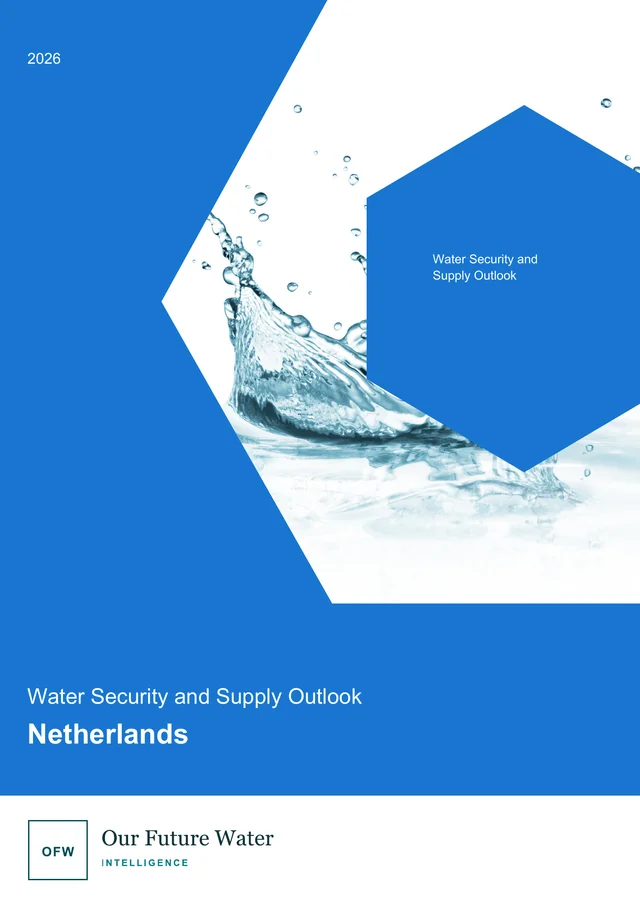
Water Security and Supply Outlook in Netherlands
- Format
- Length
- 11 pages
- Edition
- November 2026, First edition
- Price
- USD 249
11
Report details
Publication details
- Publisher
- Our Future Water Intelligence
- Report family
- Insight Brief
- Edition
- November 2026, First edition
- Format
- Length
- 11 pages
- Reference
- OFW_EXT_WATER_SECURITY_AND_SUPPLY_OUTLOOK_IN_NETHERLANDS_faa5233dc9d0
- Evidence current to
- 1 November 2026
14
Explore this report family
More Water Security and Supply Outlook briefs
Explore the same report family covering other countries.
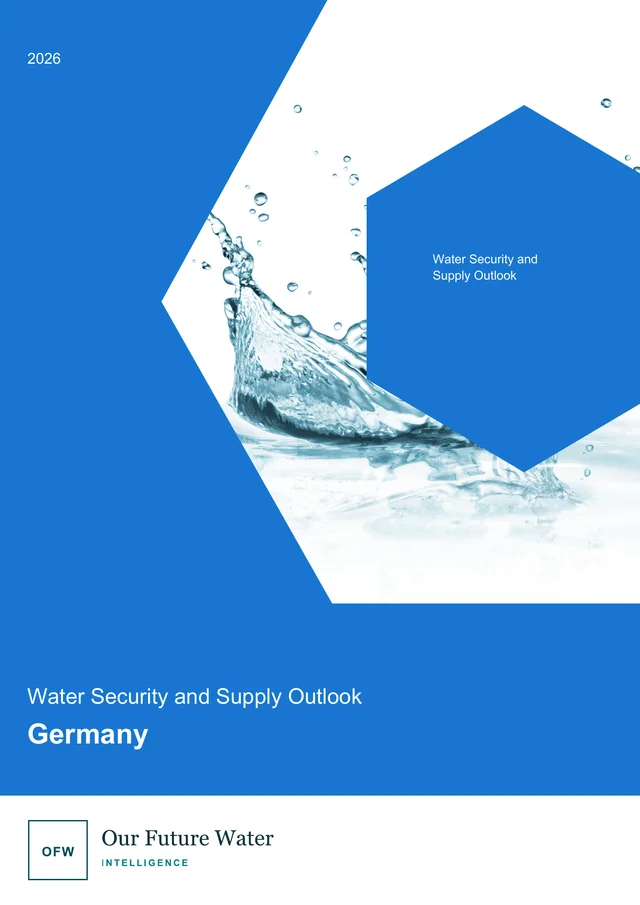
Water Security and Supply Outlook in Germany
- Geography
- Germany
- Edition
- November 2026, First edition
- Length
- 12 pages